Guild icon
URLNet
//: 𝙸𝙵 / ﹒𝚜𝚝𝚎𝚖 / NASA
Avatar
The National Aeronautics and Space Administration (NASA /ˈnæsə/) is an independent agency of the U.S. federal government responsible for the United States' civil space program and for research in aeronautics and space. Headquartered in Washington, D.C., NASA operates ten field centers across the U.S. and is organized into mission directorates for Science, Space Operations, Exploration Systems Development, Space Technology, Aeronautics Research, and Mission Support. Established in 1958, NASA succeeded the National Advisory Committee for Aeronautics (NACA) to give the U.S. space program a distinct civilian orientation focused on peaceful applications. Since then, it has led most American spaceflight programs, including Project Mercury, Project Gemini, the Apollo program, Skylab, the Space Shuttle, the International Space Station (ISS) and the ongoing multi-national Artemis program. https://en.wikipedia.org/wiki/NASA https://www.nasa.gov/
In the United States federal government, independent agencies are agencies that exist outside the federal executive departments (those headed by a Cabinet secretary) and the Executive Office of the President. In a narrower sense, the term refers only to those independent agencies that, while considered part of the executive branch, have regulato...
Aeronautics is the science or art involved with the study, design, and manufacturing of air flight-capable machines, and the techniques of operating aircraft and rockets within the atmosphere. While the term originally referred solely to operating the aircraft, it has since been expanded to include technology, business, and other aspects relate...

There are NASA facilities across the United States and internationally. NASA Headquarters in Washington, D.C. provides overall policy direction and leadership for the agency. Ten field centers manage and execute NASA's programs and activities, with all other facilities assigned to the authority of at least one of these centers. In 2013, a repor...
The National Advisory Committee for Aeronautics (NACA) was a United States federal agency that was founded on March 3, 1915, to undertake, promote, and institutionalize aeronautical research. On October 1, 1958, the agency was dissolved and its assets and personnel were transferred to the newly created National Aeronautics and Space Administrati...
10:23 PM

NASA X-43

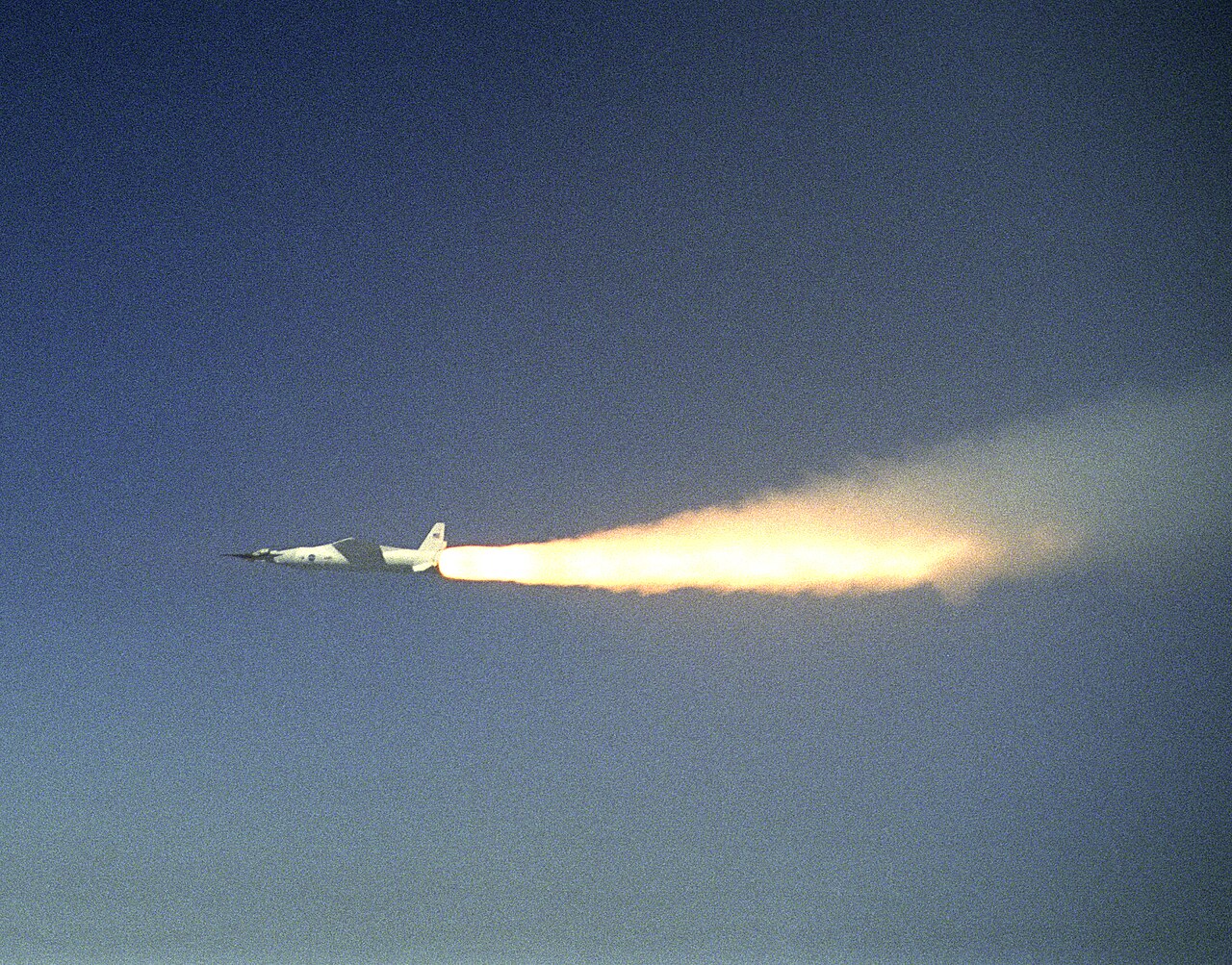
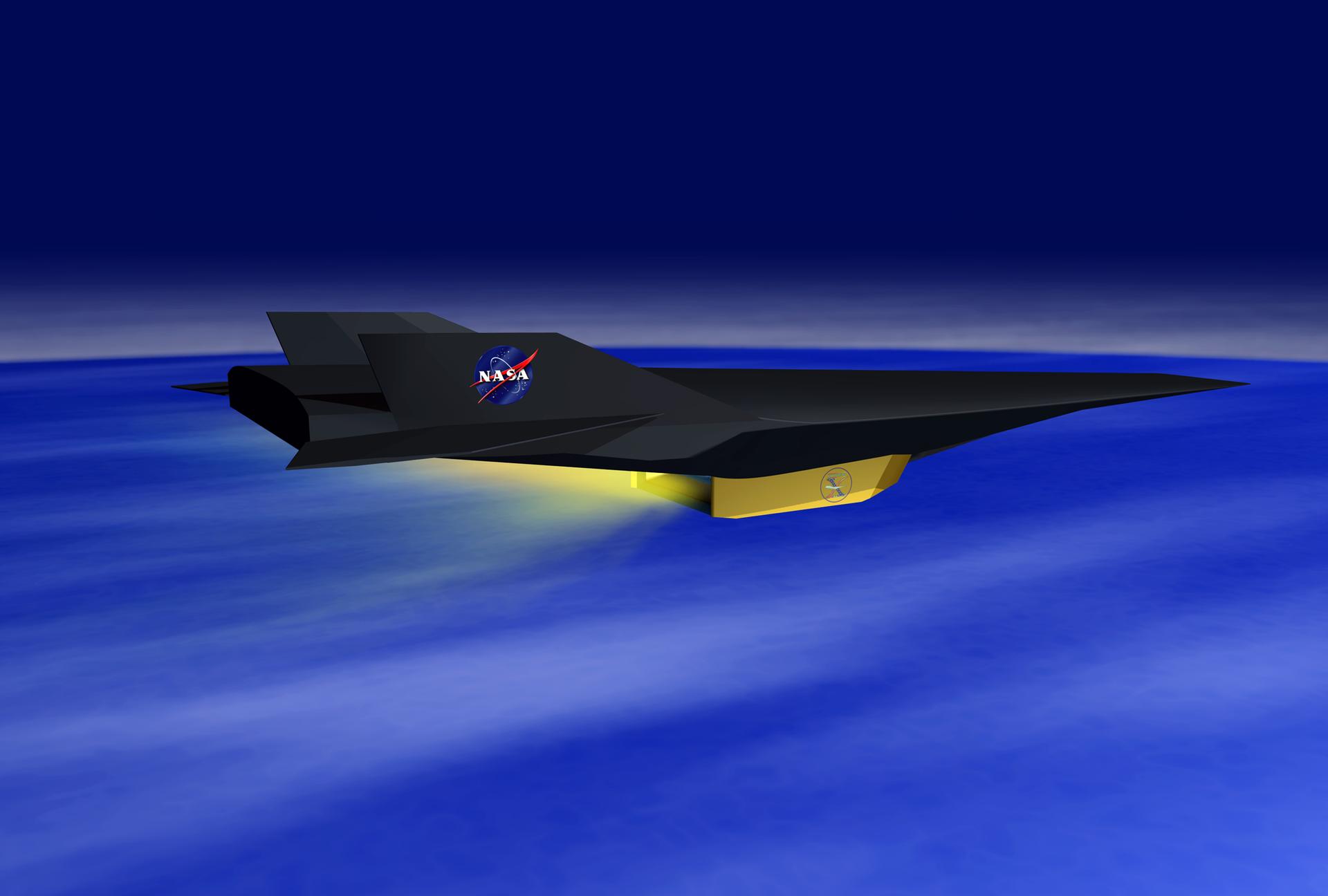
The NASA X-43 was an experimental unmanned hypersonic aircraft with multiple planned scale variations meant to test various aspects of hypersonic flight. It was part of the X-plane series and specifically of NASA's Hyper-X program developed in the late 1990s. It set several airspeed records for jet aircraft. The X-43 is the fastest jet-powered aircraft on record at approximately Mach 9.6. https://en.wikipedia.org/wiki/NASA_X-43 https://www.nasa.gov/reference/x-43a/
(edited)
The X-planes are a series of experimental United States aircraft and rockets, used to test and evaluate new technologies and aerodynamic concepts. They have an X designator within the US system of aircraft designations, which denotes the experimental research mission. Not all US experimental aircraft have been designated as X-planes; some receiv...
The NASA X-43 was an experimental unmanned hypersonic aircraft with multiple planned scale variations meant to test various aspects of hypersonic flight. It was part of the X-plane series and specifically of NASA's Hyper-X program developed in the late 1990s. It set several airspeed records for jet aircraft. The X-43 is the fastest jet-powered a...
Hyper-X research began with conceptual design and wind tunnel work in 1996. Three unpiloted X-43A research aircraft were built. Each of the 12-foot-long,
Avatar

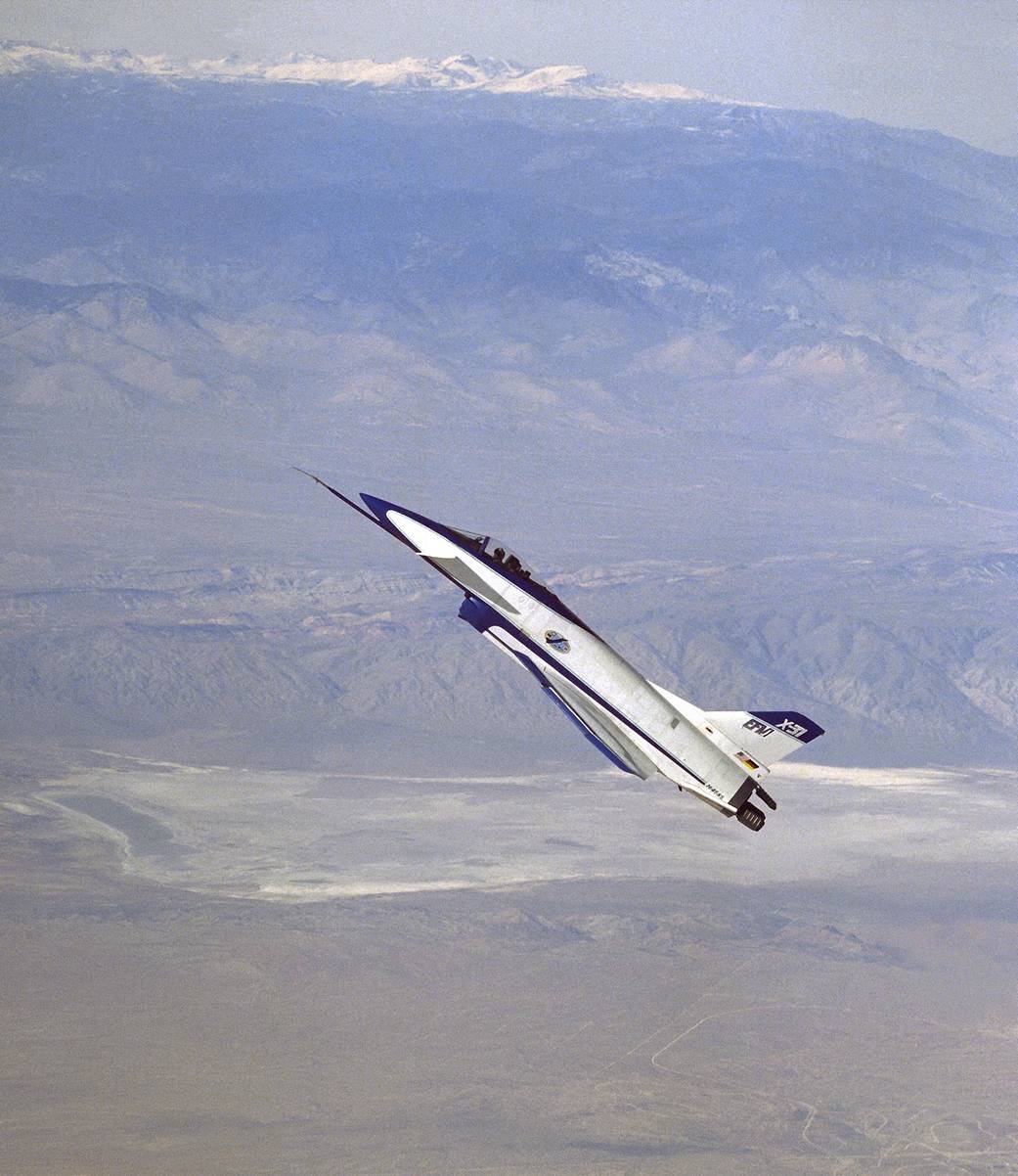
Rockwell-MBB X-31

The Rockwell-Messerschmitt-Bölkow-Blohm X-31 is an experimental jet aircraft designed to test fighter thrust vectoring technology. It was designed and built by Rockwell and Messerschmitt-Bölkow-Blohm (MBB), as part of a joint United States and German Enhanced Fighter Maneuverability program to provide additional control authority in pitch and yaw, for significantly more maneuverability than most conventional fighters. An advanced flight control system provided controlled flight at high angles of attack where conventional aircraft would stall or lose control. Two aircraft were built, of which one has survived. https://en.wikipedia.org/wiki/Rockwell-MBB_X-31 https://www.nasa.gov/aeronautics/nasa-aircraft/x-31-demonstrator/ https://www.darpa.mil/node/2047
Rockwell International was a major American manufacturing conglomerate. It was involved in aircraft, the space industry, defense and commercial electronics, components in the automotive industry, printing presses, avionics and industrial products. At its peak, Rockwell International was No. 27 on the Fortune 500 list, with assets of over $8 bill...
Messerschmitt-Bölkow-Blohm (MBB) was a West German aerospace manufacturer. It was formed during the late 1960s as the result of efforts to consolidate the West German aerospace industry; aircraft manufacturer Messerschmitt AG merged with the civil engineering and aviation firm Bölkow in 1968, while rival aircraft manufacturer Hamburger Flugzeu...
The Rockwell-Messerschmitt-Bölkow-Blohm X-31 is an experimental jet aircraft designed to test fighter thrust vectoring technology. It was designed and built by Rockwell and Messerschmitt-Bölkow-Blohm (MBB), as part of a joint United States and German Enhanced Fighter Maneuverability program to provide additional control authority in pitch and ...
Two X-31 Enhanced Fighter Maneuverability demonstrators were test-flown during the early 1990s at NASA's Dryden Flight Research Center, Edwards, CA, to obtain
The X-31 experimental aircraft was designed and built by Rockwell and Messerschmitt-Bölkow-Blohm (MBB), as part of a joint U.S. and German Enhanced Fighter Maneuverability program to improve pilots’ abilities to control the aircraft’s pitch and yaw with more finesse than was possible in most conventional fighters. One outcome was the abilit...
Exported 4 message(s)
Timezone: UTC+1